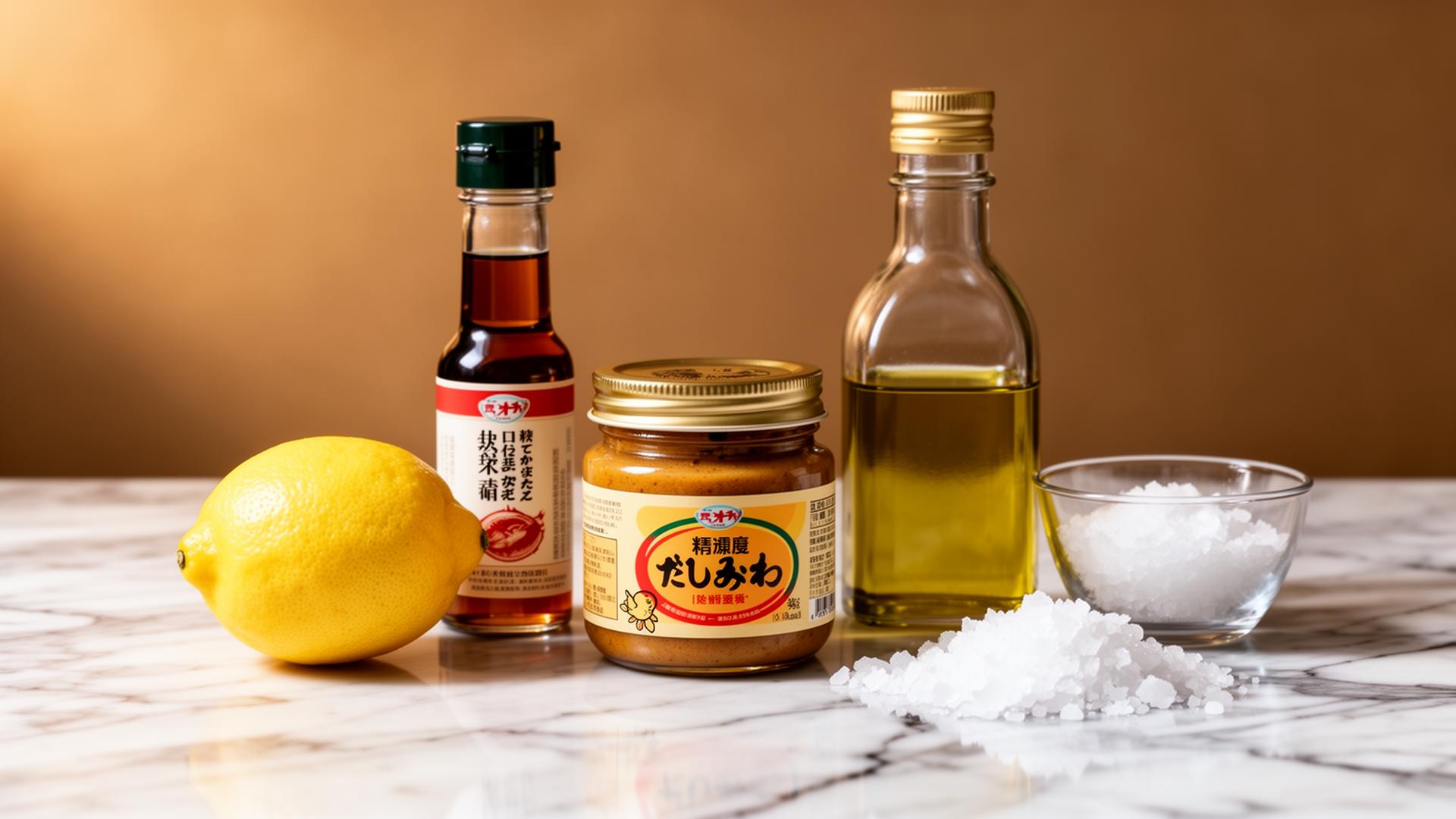
5 Ingredients That Make Any Dish Better
These pantry staples transform bland meals into restaurant-quality dishes in seconds.
1. Acid — The Most Underused Weapon
If your food tastes "fine but flat," it almost certainly needs acid. A squeeze of fresh lemon juice, a splash of good vinegar, or even a spoonful of yogurt can transform a dish from forgettable to crave-worthy.
Acid does three things: it brightens flavors, cuts through richness, and makes other seasonings pop. Think of it as the volume knob for taste.
Where to use it:
- A squeeze of lime over Thai curry
- Red wine vinegar in a beef stew, right before serving
- Lemon juice over roasted vegetables
- Apple cider vinegar in a bowl of beans
- Balsamic on fresh strawberries
The rule:: Add acid at the end of cooking, taste, and adjust. Start with less than you think you need.
2. Fish Sauce — Secret Umami Bomb
Yes, it smells intense on its own. No, your food won't taste fishy. Fish sauce adds a deep, savory richness (umami) that's impossible to achieve otherwise. It's the secret ingredient in countless restaurant kitchens — not just Asian ones.
Where to use it:
- A few dashes in tomato sauce or Bolognese
- Mixed into salad dressings
- Added to marinades for chicken or pork
- Stirred into soups and stews
- Even in caramel sauce for a salted-caramel-meets-umami experience
Start with:: Half a teaspoon per serving. You can always add more.
3. Miso Paste — Instant Depth
White (shiro) miso is one of the most versatile ingredients in any kitchen. It's fermented soybean paste that adds a subtle, complex savoriness to everything it touches — without making food taste "Japanese."
Where to use it:
- Whisk into butter for an incredible compound butter on steak or corn
- Blend into salad dressings (miso + tahini + lemon = perfection)
- Stir into marinades
- Add to cookie or brownie batter for deeper flavor
- Mix into mashed potatoes
- Glaze roasted vegetables
Storage tip:: Miso lasts virtually forever in the fridge. It's one of the best investments per ounce in your kitchen.
4. Good Olive Oil — The Finishing Touch
There are two categories of olive oil: cooking olive oil (for heat) and finishing olive oil (for flavor). Most people only buy the first. A high-quality extra virgin olive oil used as a finishing drizzle adds a peppery, fruity dimension that cheap oil can't match.
Where to use it:
- Drizzled generously over soup before serving
- On fresh mozzarella and tomatoes
- Over hummus or white bean dip
- Finishing pasta dishes
- On grilled fish or roasted vegetables
- Even on vanilla ice cream with a pinch of flaky salt
Investment:: Spend $12-20 on a small bottle of good EVOO. Use it only for finishing, never for cooking.
5. Flaky Sea Salt — Texture Meets Flavor
Table salt seasons during cooking. Flaky sea salt (like Maldon, Jacobsen, or fleur de sel) is for finishing. The difference is texture — those delicate, crunchy crystals dissolve on your tongue, creating bursts of salinity that make every bite interesting.
Where to use it:
- On top of chocolate chip cookies before baking
- Over fresh-sliced tomatoes
- On avocado toast
- Finishing steaks and chops
- On caramel desserts
- Over buttered bread
The visual:: Flaky salt also makes food look more professional and intentional.
Bonus: Fresh Herbs
Dried herbs are for long-cooking dishes. Fresh herbs are for everything else. If you can keep one plant alive on your windowsill, make it basil in summer or parsley year-round. Fresh herbs added in the last minute of cooking (or as garnish) provide aroma, color, and brightness that dried herbs simply cannot replicate.
Share this article
Ready to cook something amazing?
Enter your ingredients and let Word Recipe generate the perfect meal.
Try Word Recipe