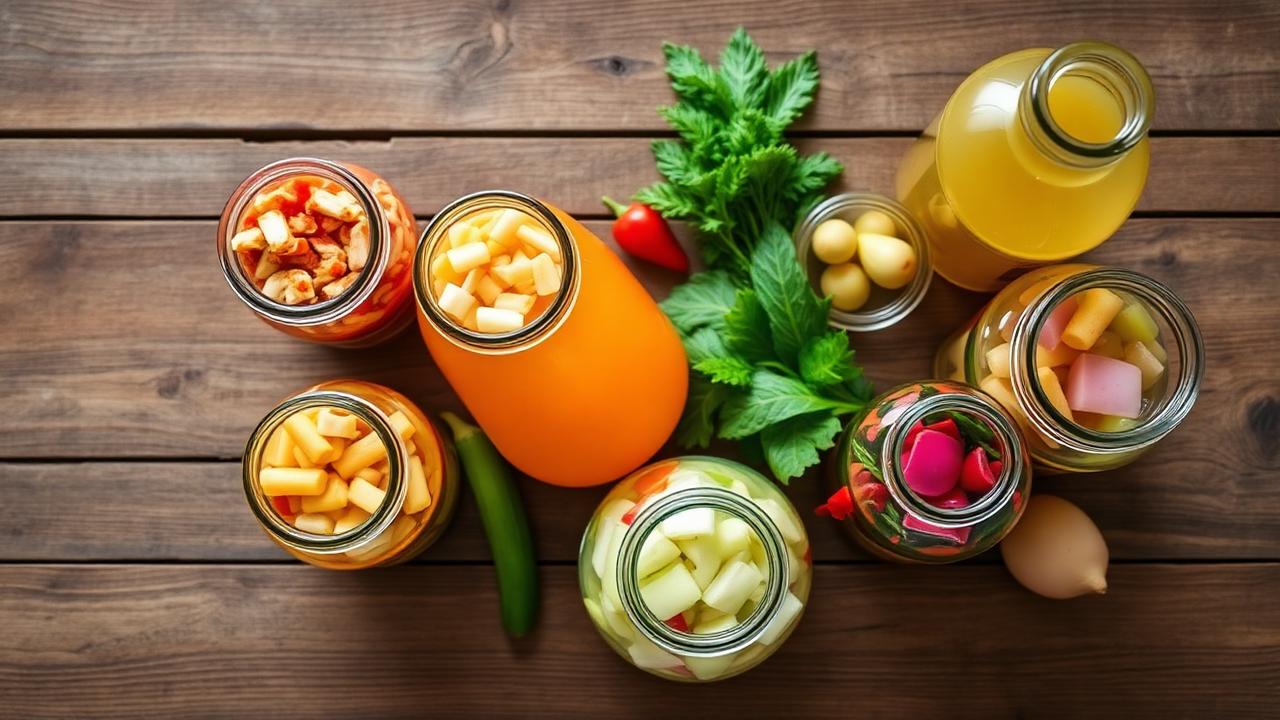
Fermentation at Home: A Complete Beginner's Guide to Probiotic-Rich Foods
Discover the ancient art of fermentation and learn how to make sauerkraut, kimchi, kombucha, and more from scratch. This step-by-step guide covers everything beginners need to know about creating delicious probiotic-rich foods at home.
Fermentation is one of the oldest food preservation techniques in human history, dating back thousands of years across every culture on the planet. From Korean kimchi to German sauerkraut, from Japanese miso to Ethiopian injera, fermented foods have been a cornerstone of traditional diets worldwide. Today, fermentation is experiencing a massive revival as more people discover the incredible health benefits and complex flavors that only fermented foods can deliver.
The beauty of fermentation lies in its simplicity. At its core, you are creating an environment where beneficial bacteria and yeasts can thrive while harmful organisms cannot. The result is food that is not only preserved but transformed into something more nutritious, more flavorful, and more digestible than the original ingredients.
Why Ferment at Home?
There are compelling reasons to start fermenting your own foods. Store-bought fermented products are often pasteurized, which kills the very probiotics that make them beneficial. When you ferment at home, you get living, active cultures in every bite. You also have complete control over ingredients, salt levels, and flavor profiles.
- Home fermentation preserves billions of live probiotics that store-bought versions often lack
- You control exactly what goes into your ferments with no additives or preservatives
- Fermented vegetables can last months in your refrigerator without losing nutritional value
- The complex tangy flavors add depth to any meal and can replace store-bought condiments
- It reduces food waste by transforming vegetables that are past their prime into delicious preserved foods
The Science Behind Fermentation
Understanding the basic science helps you become a more confident fermenter. Lacto-fermentation, the most common type for vegetables, relies on Lactobacillus bacteria that are naturally present on the surface of all fruits and vegetables. When you submerge vegetables in a saltwater brine, you create an anaerobic environment where these beneficial bacteria flourish.
The salt serves multiple purposes. It draws water out of the vegetables through osmosis, creating a natural brine. It inhibits harmful bacteria that cannot tolerate salt while allowing Lactobacillus to thrive. As the beneficial bacteria multiply, they produce lactic acid, which further lowers the pH and creates an environment where pathogens simply cannot survive.
💡 Pro tip: The ideal salt concentration for most vegetable ferments is between 2 and 3 percent by weight. Too little salt and harmful bacteria may grow. Too much and the fermentation will be sluggish or stall completely.
Essential Equipment You Need
The good news is that you do not need expensive equipment to start fermenting. Here is what you will need for your first batch.
- Wide-mouth mason jars in quart or half-gallon sizes work perfectly for beginners
- A kitchen scale for accurately measuring salt by weight rather than volume
- A sharp knife and cutting board for preparing vegetables
- Fermentation weights or a small zip-lock bag filled with brine to keep vegetables submerged
- Cloth covers or loose lids that allow gases to escape during active fermentation
You can upgrade to airlocks and specialized crocks later, but these basics will get you through your first dozen ferments with excellent results.
Your First Ferment: Classic Sauerkraut
Sauerkraut is the perfect gateway ferment. It requires only two ingredients, cabbage and salt, and is nearly impossible to mess up. The technique you learn here applies to virtually every vegetable ferment you will ever make.
Ingredients
- 1 medium head of green cabbage, about 2 pounds
- 1 tablespoon of fine sea salt or kosher salt (about 2 percent of the cabbage weight)
Step-by-Step Instructions
- 1.Remove the outer leaves of the cabbage and set one aside. Quarter the cabbage, remove the core, and slice it into thin ribbons about the width of a nickel
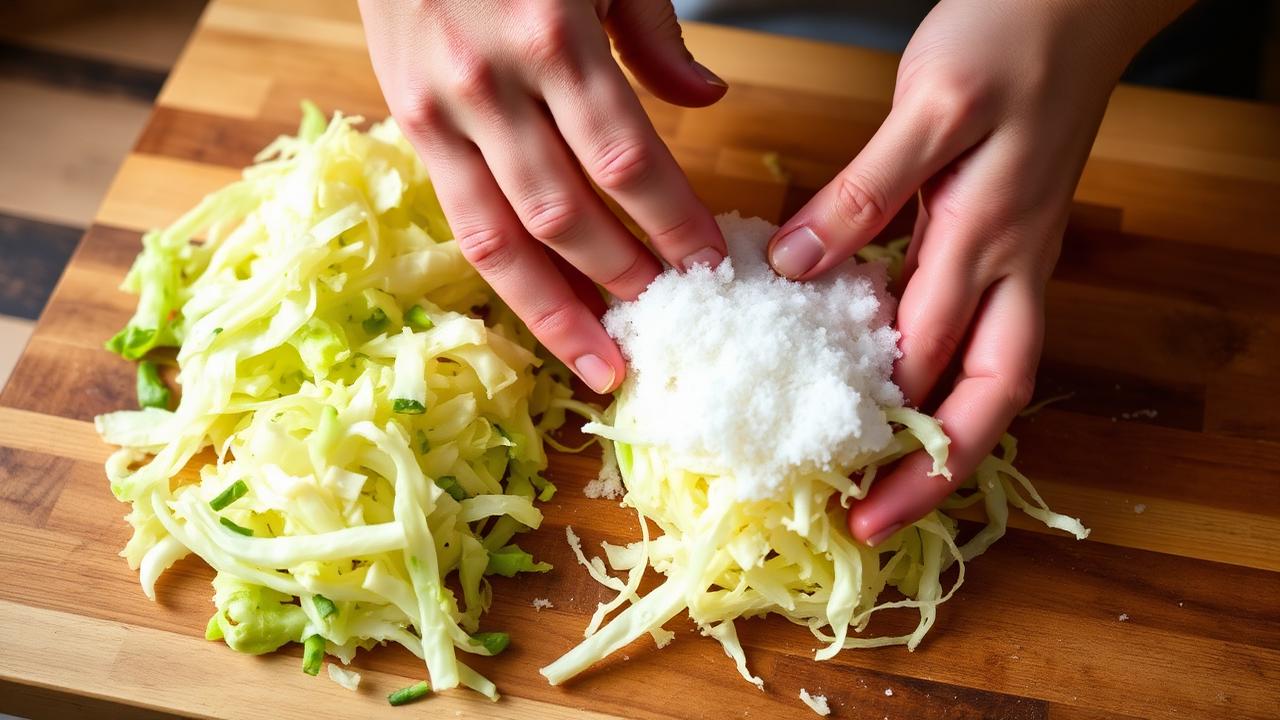
- 2.Place the shredded cabbage in a large bowl and sprinkle the salt evenly over it. Begin massaging the salt into the cabbage with your hands, squeezing and kneading firmly
- 3.Continue massaging for 5 to 10 minutes until the cabbage has released a significant amount of liquid and has reduced in volume by about half. The cabbage should feel wet and limp
- 4.Pack the cabbage tightly into a clean mason jar, pressing down firmly with your fist or a wooden spoon after each handful. The brine should rise above the cabbage
- 5.Place the reserved cabbage leaf on top and press it down to create a barrier. Add a fermentation weight or a small bag filled with saltwater to keep everything submerged
- 6.Cover the jar with a cloth secured by a rubber band or use a loose-fitting lid. Place it on a plate to catch any overflow
- 7.Store at room temperature, ideally between 65 and 75 degrees Fahrenheit, away from direct sunlight. Check daily and press the cabbage back under the brine if it rises
Your sauerkraut will be ready in 3 to 7 days for a mild flavor or 2 to 4 weeks for a deeper, more complex tang. Taste it daily after the first few days and refrigerate when it reaches your preferred level of sourness.
💡 Pro tip: Save a few tablespoons of brine from your finished sauerkraut. Adding it to your next batch acts as a starter culture and gets fermentation going faster with more consistent results.
Easy Kimchi for Beginners
Once you have mastered sauerkraut, kimchi is a natural next step. This simplified version delivers authentic flavor without the complexity of traditional recipes.
Ingredients
- 1 large napa cabbage, about 2 pounds, cut into 2-inch pieces
- 2 tablespoons sea salt
- 4 cloves garlic, minced
- 1 tablespoon fresh ginger, grated
- 2 tablespoons Korean red pepper flakes (gochugaru)
- 1 tablespoon fish sauce or soy sauce for a vegan version
- 2 green onions, sliced
- 1 small carrot, julienned
Salt the cabbage pieces in a large bowl and let them sit for 1 to 2 hours, tossing occasionally. Rinse thoroughly and drain well. Mix the garlic, ginger, pepper flakes, and fish sauce into a paste. Toss the cabbage, carrot, and green onions with the paste until everything is evenly coated. Pack into jars, press down firmly, and ferment at room temperature for 2 to 5 days, burping the jar daily to release built-up carbon dioxide.
Fermented Hot Sauce
If you love hot sauce, fermented versions deliver a depth of flavor that vinegar-based sauces simply cannot match. The fermentation mellows the raw heat of the peppers while developing complex, fruity undertones.
- Roughly chop 1 pound of fresh hot peppers (jalapenos, habaneros, or a mix) and combine with 4 cloves of garlic
- Add 2 percent salt by weight and pack into a jar, pressing to release juices
- Ferment for 5 to 7 days at room temperature, then blend until smooth
- Strain for a thinner consistency or leave chunky for a rustic sauce
- Add a splash of vinegar for shelf stability and bottle in clean jars
💡 Pro tip: Mixing different pepper varieties creates more complex flavors. Try combining sweet red peppers with habaneros for a fruity heat, or use smoked chipotles with fresh jalapenos for a deep, smoky kick.
Kombucha: Your First Fermented Beverage
Kombucha is a fermented tea that has taken the health world by storm. While it requires a SCOBY (symbiotic culture of bacteria and yeast), the process itself is straightforward.
- 1.Brew 4 cups of black or green tea with half a cup of sugar. Let it cool completely to room temperature
- 2.Pour the sweetened tea into a large glass jar and add 1 cup of starter kombucha (from a previous batch or store-bought raw kombucha)
- 3.Gently place the SCOBY on top of the liquid. Cover with a cloth and secure with a rubber band
- 4.Let it ferment at room temperature for 7 to 14 days. The longer it ferments, the more tart and less sweet it becomes
- 5.For fizzy kombucha, bottle the finished brew with a tablespoon of fruit juice or a few pieces of fresh fruit per bottle and let it carbonate at room temperature for 2 to 3 days before refrigerating
Troubleshooting Common Fermentation Problems
Even experienced fermenters run into issues. Here are the most common problems and how to solve them.
- Kahm yeast appears as a white, filmy layer on the surface. It is harmless but unpleasant. Skim it off and ensure your vegetables stay submerged under the brine
- Soft or mushy vegetables usually mean too little salt was used or the temperature was too warm. Aim for 2 to 3 percent salt and keep ferments below 75 degrees Fahrenheit
- No bubbling activity after 48 hours could indicate the environment is too cold, the salt level is too high, or the vegetables were treated with chemicals that killed the natural bacteria. Try moving to a warmer spot
- A strong sulfur smell during the first few days of cabbage fermentation is completely normal and will dissipate as the ferment matures
- Pink or red discoloration on garlic during fermentation is a natural chemical reaction and is perfectly safe to eat
Incorporating Fermented Foods Into Your Diet
The key to reaping the benefits of fermented foods is consistency. Start small with a tablespoon or two per meal and gradually increase as your digestive system adapts.
- Add a forkful of sauerkraut or kimchi to grain bowls, tacos, sandwiches, or scrambled eggs
- Use fermented hot sauce as a condiment for virtually any savory dish
- Drink a small glass of kombucha with meals to aid digestion
- Mix fermented vegetables into salad dressings for a probiotic boost
- Top avocado toast with a generous pile of tangy fermented vegetables for a gut-friendly breakfast

Storage and Safety Tips
Properly stored fermented foods can last for months and even improve with age. Once your ferment reaches your desired flavor, transfer it to the refrigerator. The cold temperature dramatically slows fermentation, essentially preserving the flavor at that point.
- Always use clean utensils when scooping from your fermentation jar to prevent contamination
- Trust your senses. Fermented foods should smell tangy and pleasantly sour, never putrid or rotten
- Keep vegetables submerged under brine at all times. Exposed surfaces are where mold can develop
- If you see fuzzy mold in colors like black, blue, or green, discard the entire batch. Do not try to scrape it off
- Label your jars with the date and contents so you can track fermentation times and replicate successes
Final Thoughts
Fermentation is a skill that rewards patience and curiosity. Your first batch of sauerkraut might not be perfect, but by your third or fourth attempt, you will develop an intuition for how the process works. You will learn to read the bubbles, smell the changes, and taste the transformation from raw vegetable to probiotic-rich superfood.
The fermentation community is one of the most welcoming and enthusiastic groups of home cooks you will ever find. Share your experiments, ask questions, and do not be afraid to get creative. Once you master the basics, the possibilities are truly endless, from fermented salsa and pickled garlic to water kefir and fermented oat porridge.
Start with a single head of cabbage and a tablespoon of salt. In a week, you will have a jar of tangy, crunchy, probiotic-packed sauerkraut that puts any store-bought version to shame. That first successful ferment is all it takes to spark a lifelong passion.
Share this article
Ready to cook something amazing?
Enter your ingredients and let Word Recipe generate the perfect meal.
Try Word Recipe