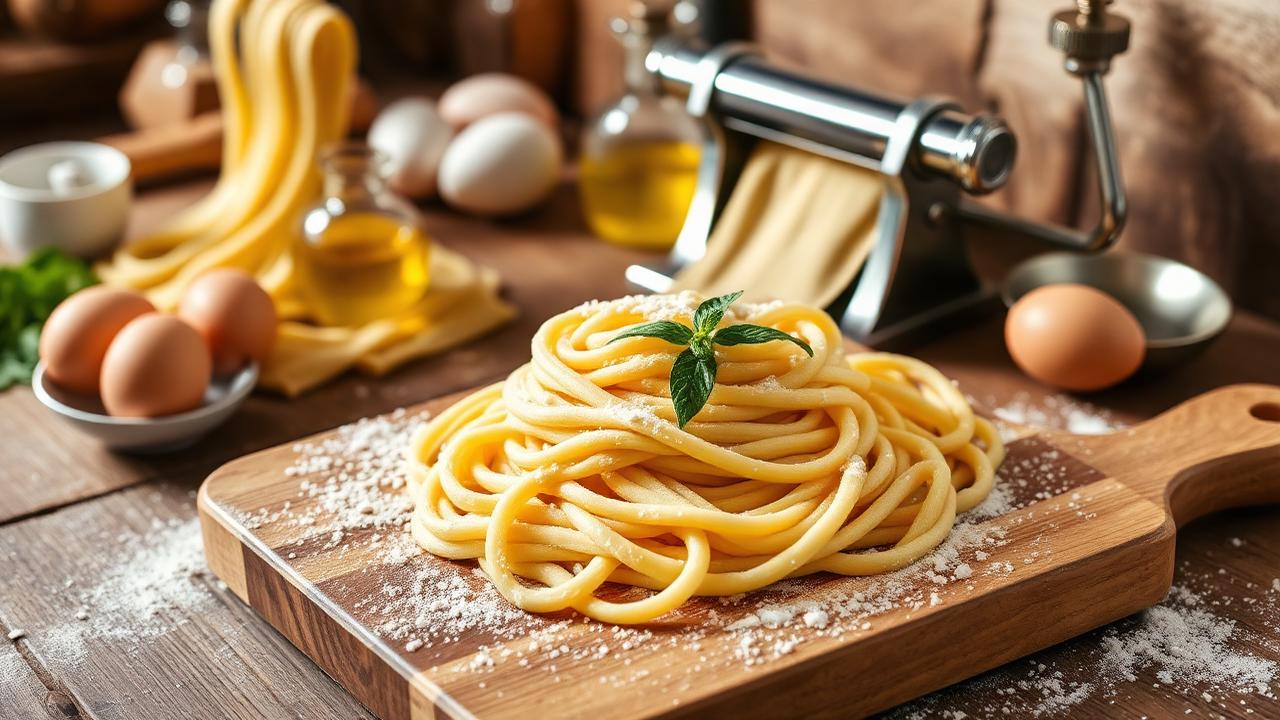
How to Make Fresh Homemade Pasta from Scratch: The Ultimate Guide
Learn how to make restaurant-quality fresh pasta at home with just flour, eggs, and a little patience. This step-by-step guide covers everything from mixing the dough to cutting perfect noodles.
Why Homemade Pasta Is Worth the Effort
There is something deeply satisfying about making pasta from scratch. The texture of fresh pasta is silky, tender, and leagues beyond anything you can buy in a box. Once you taste the difference, you will never look at dried pasta the same way again.
Fresh homemade pasta cooks in just 2 to 3 minutes, absorbs sauces beautifully, and gives you complete control over thickness, shape, and flavor. Whether you are making fettuccine for a weeknight dinner or ravioli for a special occasion, mastering the basics opens up an entire world of Italian cooking.
The Essential Ingredients
The beauty of fresh pasta lies in its simplicity. You only need a handful of pantry staples to get started:
- 00 flour or all-purpose flour — 00 flour creates a silkier texture, but all-purpose works perfectly fine for beginners
- Large eggs — use room temperature eggs for easier mixing
- Olive oil — a small drizzle adds elasticity and flavor to the dough
- Salt — a pinch in the dough and generous salt in the boiling water
The standard ratio is 100 grams of flour per egg. For two servings, use 200 grams of flour and 2 large eggs. Scale up as needed for larger batches.
Step 1: Making the Dough
Start by mounding your flour on a clean work surface or in a large bowl. Create a deep well in the center and crack your eggs into it. Add a drizzle of olive oil and a pinch of salt.
Using a fork, gently beat the eggs while gradually incorporating flour from the inner walls of the well. As the mixture thickens, switch to using your hands. Bring the dough together into a shaggy mass, then begin kneading.
The Kneading Process
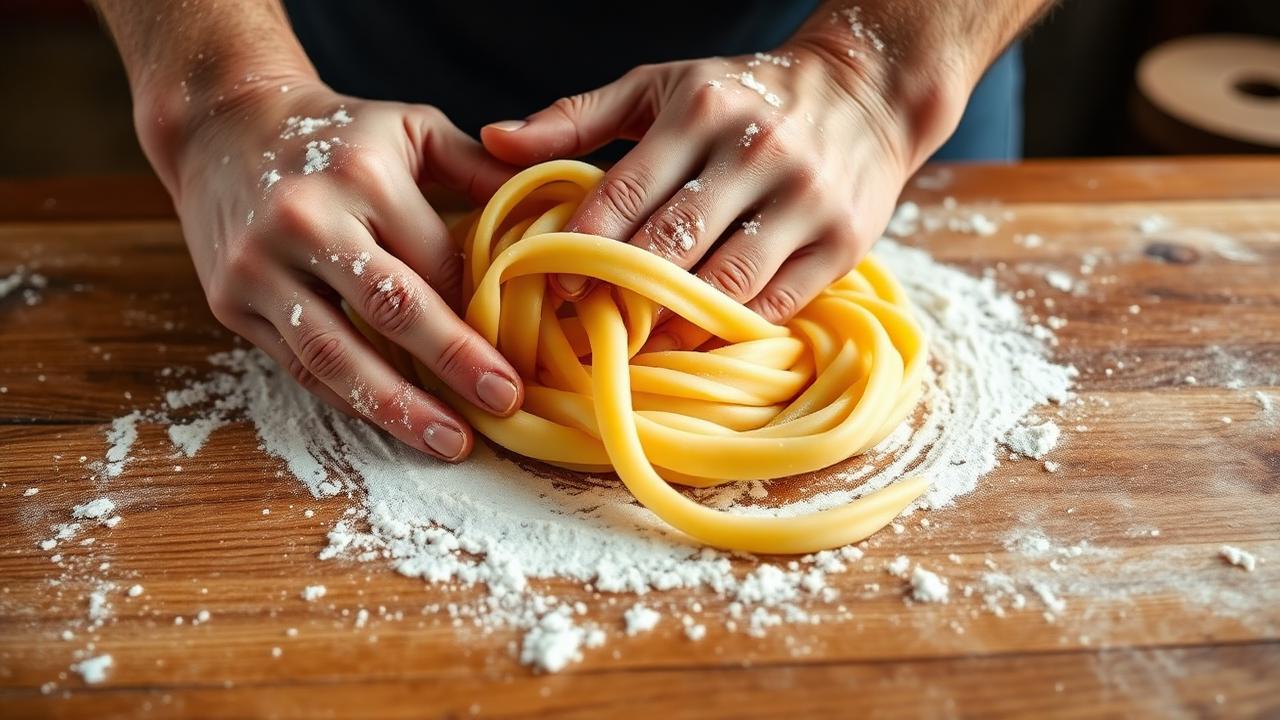
Kneading is the most important step. Push the dough away from you with the heel of your palm, fold it back over itself, rotate it a quarter turn, and repeat. Continue for 8 to 10 minutes until the dough is smooth, elastic, and springs back when you press it with your finger.
If the dough feels too sticky, add a light dusting of flour. If it is too dry and crumbly, wet your hands slightly and continue kneading. The dough should feel like soft Play-Doh when it is ready.
Step 2: Resting the Dough
Wrap the dough tightly in plastic wrap or cover it with an inverted bowl and let it rest at room temperature for at least 30 minutes. This step is not optional. Resting allows the gluten to relax, making the dough much easier to roll out without it snapping back.
You can also rest the dough in the refrigerator for up to 24 hours. Just bring it back to room temperature before rolling.
Step 3: Rolling and Cutting
Divide the rested dough into 4 equal pieces. Work with one piece at a time and keep the rest covered to prevent drying.
If using a pasta machine, start at the widest setting and pass the dough through. Fold it in thirds, rotate 90 degrees, and pass through again. Repeat this laminating process 3 to 4 times, then gradually decrease the thickness setting until you reach your desired thinness. For fettuccine, setting 5 or 6 on most machines works well.
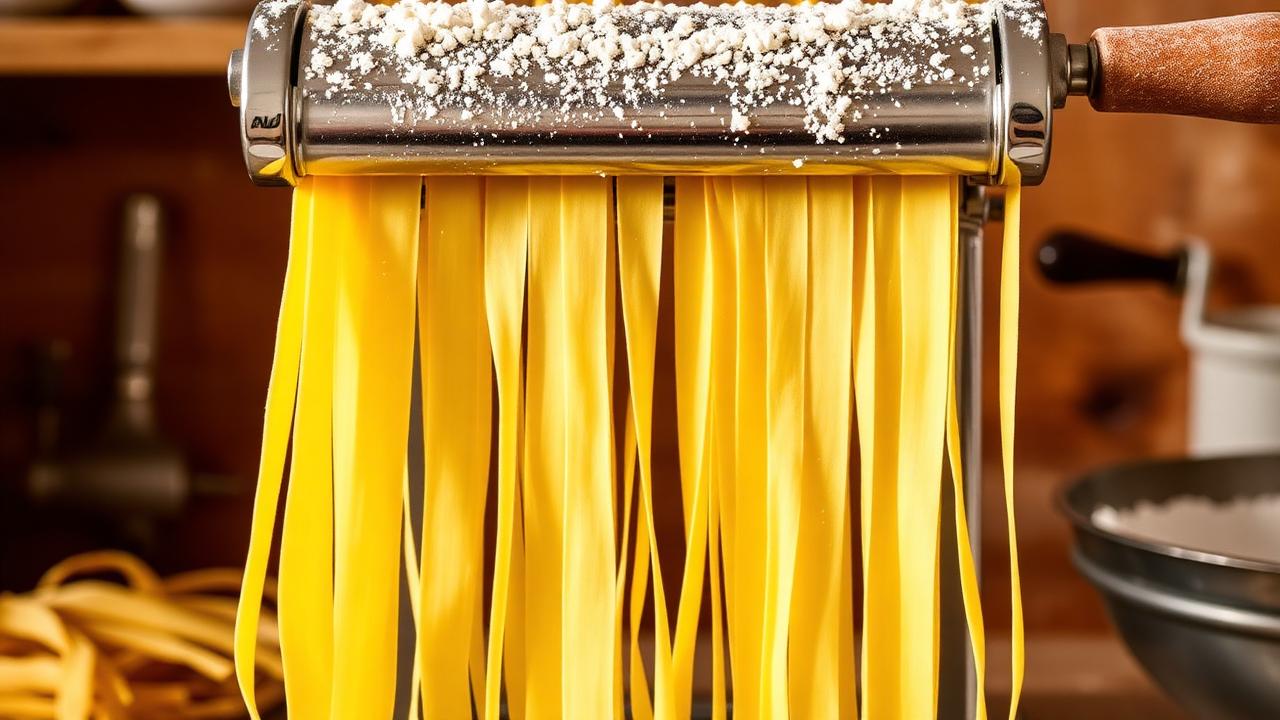
If rolling by hand, use a long rolling pin on a well-floured surface. Roll from the center outward, rotating the dough frequently. Aim for a sheet thin enough that you can almost see your hand through it.
Cutting Your Pasta Shapes
For fettuccine or tagliatelle, lightly flour the sheet, loosely roll it up, and cut crosswise into ribbons about 1 cm wide. Unravel the noodles and toss them with a little flour to prevent sticking.
For pappardelle, cut wider strips of about 2 to 3 cm. For lasagna sheets, simply cut the rolled dough to fit your baking dish.
You can also use cookie cutters for ravioli rounds or shape the dough into orecchiette, farfalle, or any shape you can imagine.
Step 4: Cooking Fresh Pasta
Bring a large pot of generously salted water to a rolling boil. Fresh pasta cooks incredibly fast compared to dried pasta. Most shapes will be done in 2 to 4 minutes.
Test a piece after 2 minutes. Fresh pasta should be tender but still have a slight bite. Drain it quickly and toss it immediately with your sauce. Fresh pasta absorbs sauce much better than dried, so have your sauce ready before you start boiling.
Pro Tips for Perfect Pasta Every Time
- 1.Weigh your flour — measuring by weight is far more accurate than using cups and gives consistent results every batch
- 2.Do not skip the rest — under-rested dough will fight you at every step and result in tough, chewy pasta
- 3.Keep surfaces floured — fresh pasta is sticky, so dust your work surface, rolling pin, and cut noodles liberally with flour or semolina
- 4.Cook in batches — if making a large amount, cook in batches so the noodles do not clump together in the pot
- 5.Save the pasta water — the starchy cooking water is liquid gold for emulsifying and thickening your sauces
- 6.Dry for storage — hang cut pasta over a drying rack or spread it on a floured baking sheet. Once fully dried, store in an airtight container for up to a month
Common Mistakes to Avoid
- Adding too much flour while kneading — this makes the dough tough and dry. Only add flour if the dough is truly sticking to your hands
- Rolling too thick — fresh pasta should be thin. Thick pasta turns gummy and doughy when cooked
- Overcooking — fresh pasta goes from perfect to mushy in under a minute. Watch it closely and taste frequently
- Using cold eggs — cold eggs do not incorporate into flour as smoothly. Always use room temperature eggs
Pairing Your Fresh Pasta with Sauces
Fresh pasta deserves fresh, simple sauces that let the noodle shine. Here are some classic pairings:
- Fettuccine — butter and Parmesan (fettuccine Alfredo), or a slow-cooked Bolognese ragu
- Tagliatelle — wild mushroom cream sauce, or a classic meat ragu
- Pappardelle — braised short rib sauce, or a hearty lamb ragu
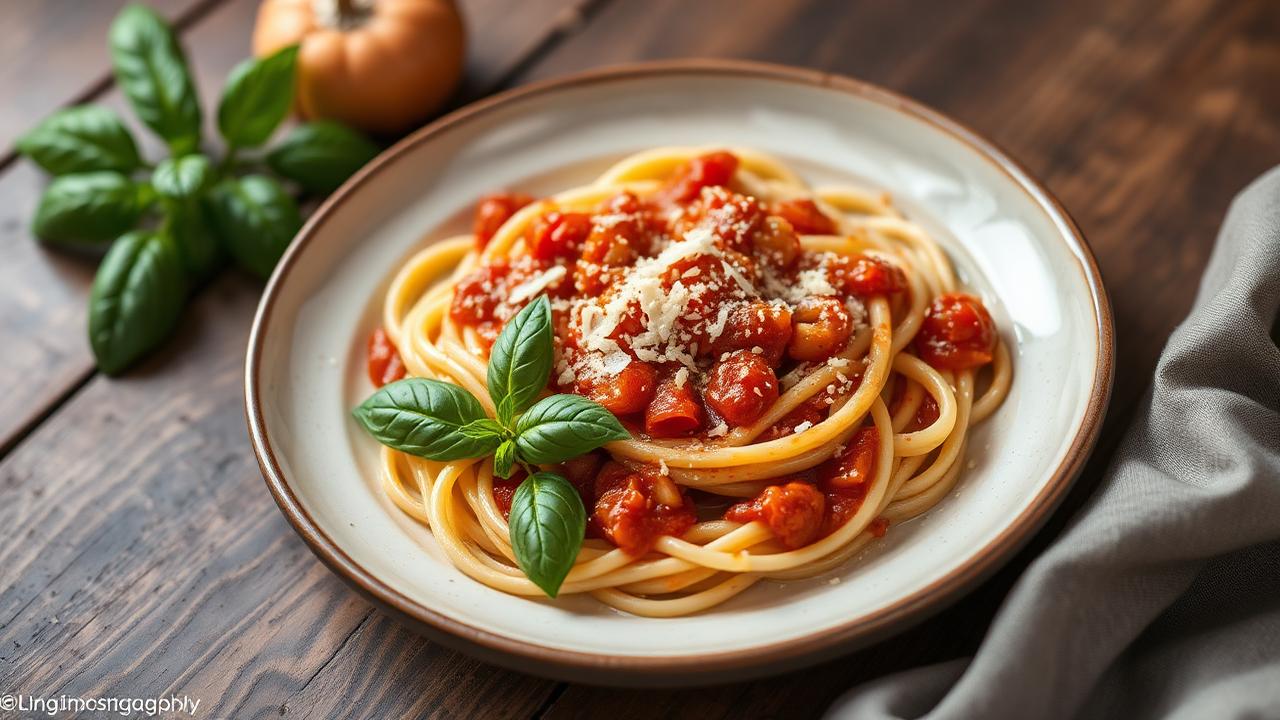
- Ravioli — brown butter and sage, or a light tomato basil sauce
The key is balance. Rich, heavy sauces pair well with wider, sturdier shapes. Lighter sauces work beautifully with thinner, more delicate noodles.
Final Thoughts
Making fresh pasta at home is one of the most rewarding cooking skills you can learn. It requires no special equipment beyond a rolling pin, and the ingredients cost almost nothing. Once you get comfortable with the basic dough, you can experiment with adding spinach, beetroot, squid ink, or herbs directly into the pasta for stunning colors and flavors.
Start simple, be patient with the kneading and resting steps, and you will be turning out beautiful handmade pasta in no time.
Share this article
Ready to cook something amazing?
Enter your ingredients and let Word Recipe generate the perfect meal.
Try Word Recipe